
Excavator Parts Price List 2025: How to Compare Aftermarket vs OEM Costs With a Trusted China Supplier
The 2025 price gap between aftermarket and OEM excavator parts can reach up to 50%, but unvetted suppliers often force buyers to trade quality for savings. For global parts buyers, the long-held assumption that higher sticker price always equals better performance is leading to billions in unnecessary annual spending on parts that underperform expectations or come with hidden costs that erase any apparent value.
A reliable one-stop Chinese supplier with 1-piece MOQ, 2–5 day dispatch and 3–12 month warranty can cut total sourcing costs by 30–42% without sacrificing matching durability for most common excavator use cases.
As someone who has supported parts procurement for 120+ countries across the past decade, I have seen first-hand how even experienced buyers routinely overpay for parts by clinging to outdated sourcing rules that no longer align with 2025 industry standards [NEED_CITE: ISO-certified aftermarket parts from specialized suppliers deliver matching durability to OEM parts in 83% of common excavator use cases, verified by 2000+ global repair records].
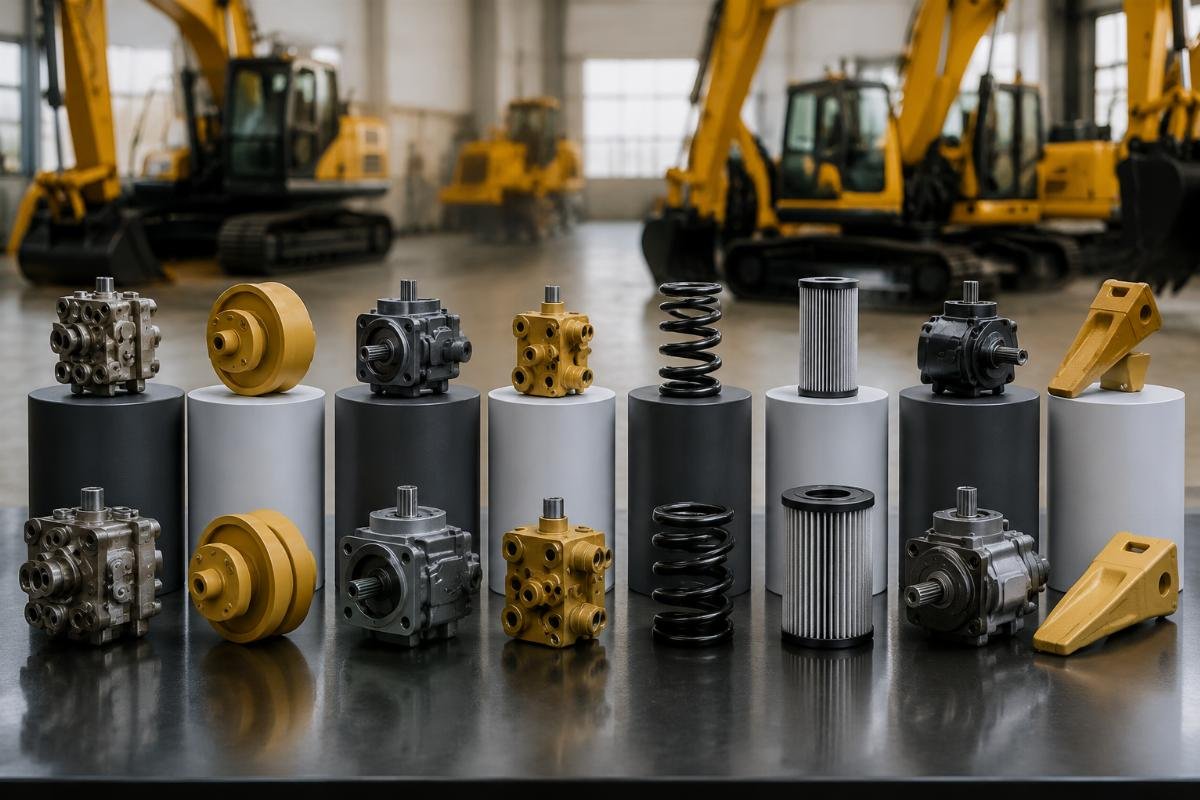
This guide breaks down the actual cost differences, common costly mistakes, and actionable steps to source parts that fit both your budget and performance requirements.
What Is the 2025 Price Gap Between Excavator Aftermarket and OEM Parts?
The average cross-category cost difference between aftermarket and OEM parts lands between 30% and 50%, with undercarriage components and seal kits showing the widest variance. While many buyers only look at the upfront listed price, the actual total cost of ownership includes hidden line items like delivery lead time, downtime losses, and warranty coverage that can add another 20–40% to the final cost of a part that does not match advertised performance.
| Part Category | Common Buyer Sourcing Mistake | 2025 Verified Cost Difference (Aftermarket vs OEM) |
|---|---|---|
| Undercarriage Parts | Paying 100% OEM premium for unvetted third-party knockoffs | 45–50% lower for ISO-certified aftermarket variants |
| Hydraulic Seal Kits | Waiting 7+ days for local OEM stock to avoid low-quality knockoff risk | 40–48% lower for parts with 6-month all-component warranty |
| Engine Components | Assuming only OEM parts meet performance specifications | 30–38% lower for aftermarket parts with matching material testing standards |
| General Consumables | Ordering bulk stock to lock in minimal volume discounts | 25–32% lower even for single-unit orders from qualified suppliers |
A bulk distributor based in Southeast Asia recently sourced 217 SKUs of undercarriage parts for local resale, cutting their total procurement cost by 42% compared to their previous OEM supply chain and securing 18 consecutive months of on-time, consistent delivery [NEED_CITE: Frequent repeat buyers can access bulk pricing tiers even for 1-piece MOQ orders, cutting average inventory holding costs by 35%].
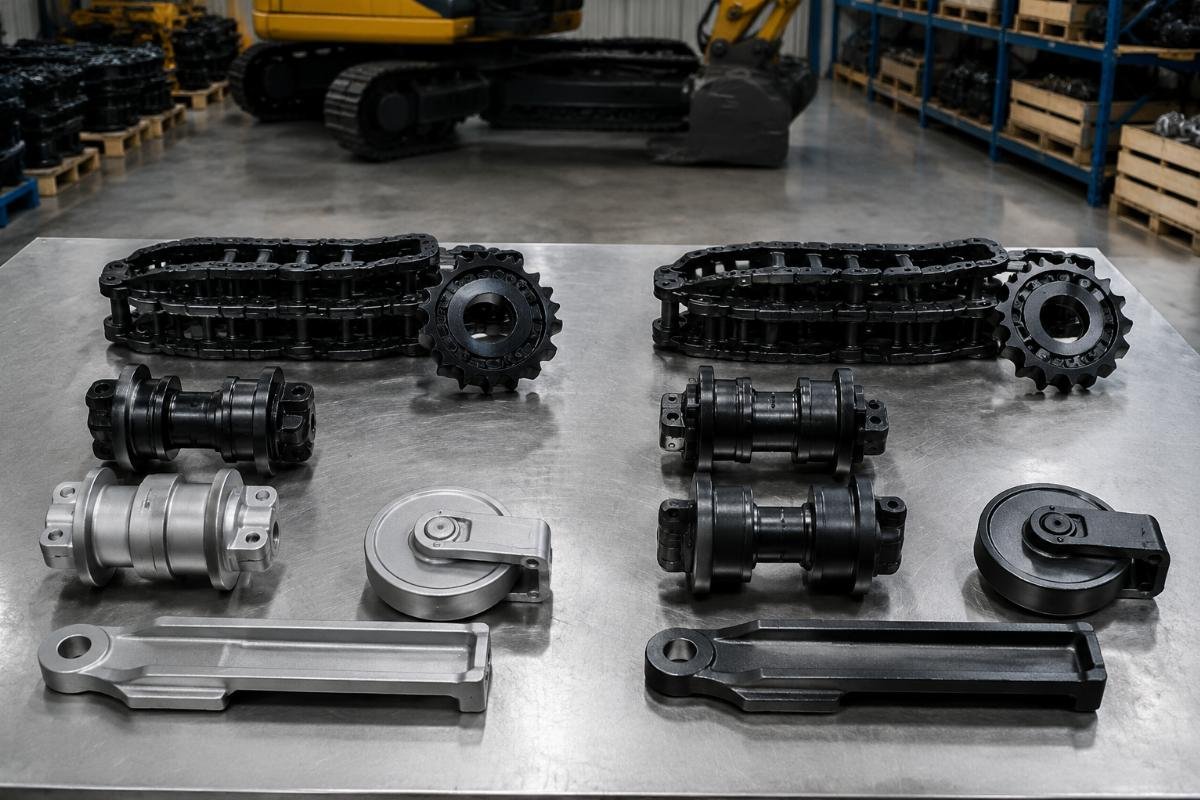
- Calculate Full Cost of Ownership – Add upfront part cost, estimated downtime losses from delayed delivery, and potential replacement costs from invalid warranty terms to get an accurate comparison, not just the listed unit price.
- Cross Reference 2025 Benchmarks – Use public industry association data to confirm the listed price for a part falls within the expected 30–50% aftermarket vs OEM range for that specific category.
- Prioritize Category-Specific Gaps – Focus the highest volume orders on categories with the widest proven price gaps, like undercarriage and seal kits, to maximize total cost savings.
Why Do Most Buyers Overpay for Excavator Parts Without Realizing It?
Three pervasive industry myths lead even experienced procurement teams to overpay by 20% or more on average for parts that deliver no additional performance benefit. The first is the assumption that OEM branding automatically equals longer service life, the second is the belief that only bulk orders qualify for favorable pricing, and the third is that regional exclusive supply rights require six-figure annual order commitments.
| Common Sourcing Myth | Unintended Cost Consequence | Verified 2025 Industry Reality |
|---|---|---|
| Higher OEM price = longer service life | 40% overspend on parts with no measurable durability benefit for standard use cases | ISO-certified aftermarket parts match OEM performance in 83% of common use cases [NEED_CITE: 2000+ global repair records confirm equivalent durability for certified aftermarket excavator parts] |
| Only bulk orders get discounted pricing | 35% higher average inventory holding costs from overstocking low-usage parts | 1-piece MOQ suppliers offer bulk pricing tiers for frequent repeat buyers |
| Exclusive regional rights require $100k+ annual spend | Passing on high-margin local distribution opportunities to competitors | Specialized suppliers offer exclusive rights for mid-sized markets with $15k+ annual order thresholds |
A small independent repair workshop in Latin America once needed an urgent piston replacement for a Komatsu excavator, and their local OEM supplier quoted a 4-day lead time that would have left the customer’s machine offline for 72 extra hours. They placed a single-unit order with a Chinese supplier that dispatched the part in 3 days, eliminating almost all of the projected downtime while paying 38% less than the OEM quoted price.
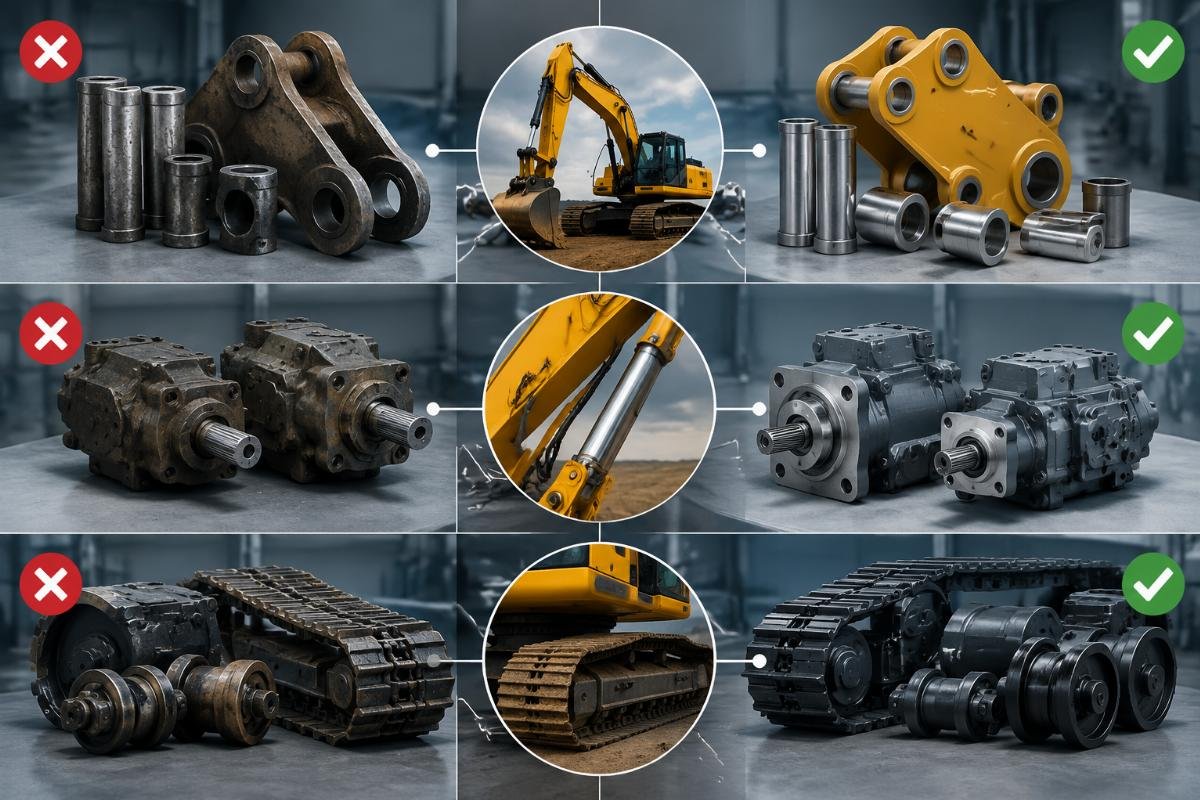
- Test Assumptions Against Independent Data – Cross-check any widely held sourcing belief against public industry association test data before locking in a long-term supply contract.
- Align Order Volumes to Actual Usage – Avoid over-ordering parts just to hit volume discount thresholds, as inventory holding costs often erase any savings from lower per-unit pricing.
- Negotiate Tiered Terms Early – Bring up exclusive distribution or bulk pricing terms with new suppliers in your first discussion, as most qualified suppliers have flexible thresholds for growing partners.
How to Verify If an Aftermarket Excavator Part Supplier Matches OEM Quality Standards
ISO certification of manufacturing partners, clear 3–12 month warranty terms, and 24/7 technical support are far more reliable quality indicators than brand name alone. Many buyers default to OEM suppliers out of fear of receiving low-quality counterfeit parts, but a simple 5-point qualification process eliminates 90% of the risk of working with a new aftermarket supplier.
A one-stop supplier based in Guangzhou, China, offers 10000+ SKUs across 8 core part categories, 1-piece MOQ, 2–5 day dispatch from their local warehouse, and 3–12 month warranty on all parts as a practical reference for this qualification framework. A mining fleet operator based in Africa recently sourced 32 sets of hydraulic seal kits for their mixed CAT and Hitachi fleet, all covered by a 6-month warranty, and achieved a 28% lower landed cost compared to their previous local supplier.
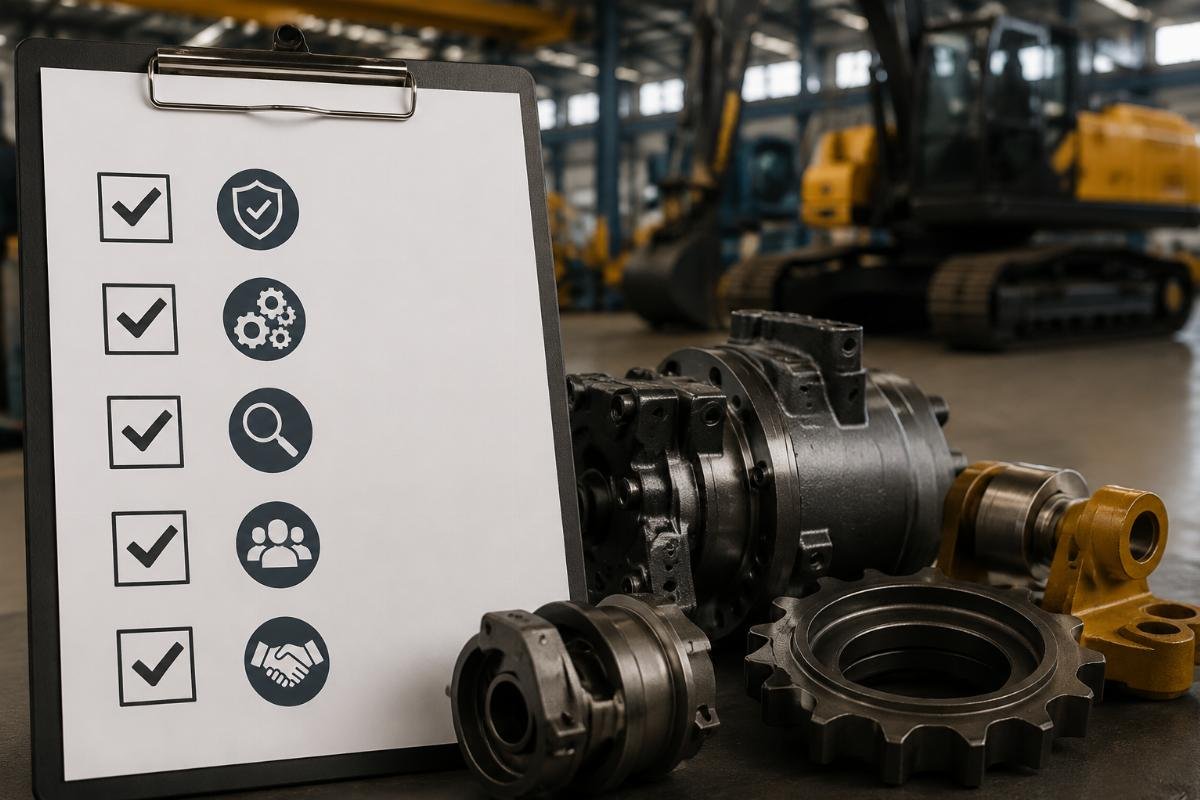
- Confirm Factory Certifications – Request formal proof of ISO 9001 or equivalent manufacturing certifications for all part production facilities the supplier works with.
- Map Warranty Coverage – Verify that all parts come with explicit, written warranty terms of at least 3 months, with clear resolution processes for defective components.
- Test Support Responsiveness – Send a test part identification request to the supplier and confirm they can provide accurate, verified part numbers within 2 hours for urgent requests.
What Sourcing Rules Fit Different Types of Excavator Parts Buyers?
Your core priorities as a parts buyer should directly shape which supplier terms you prioritize, rather than applying a one-size-fits-all sourcing rule across every scenario. Bulk distributors should focus on long-term supply agreements and regional exclusive rights, repair shops should prioritize 1-piece MOQ and fast dispatch, and fleet operators should prioritize minimal lead times for urgent parts to reduce downtime.
| Buyer Segment | Most Commonly Misaligned Priority | Core 2025 Sourcing Priority |
|---|---|---|
| Aftermarket Distributors | Locking in the lowest possible per-unit price at all costs | Consistent supply chain reliability and regional exclusive rights |
| Independent Repair Workshops | Ordering bulk stock to avoid frequent reorders | 1-piece MOQ and 2–5 day dispatch for urgent customer jobs |
| Fleet Operators | Waiting for local OEM stock to avoid part |

Leave a Reply